Next generation
3D cell culture.
Start trusting your matrix.

StemGel is a fully synthetic, chemically defined hydrogel. Low batch-to-batch variability. Tunable mechanics. Peer-reviewed and validated in liver organoid research at leading Berlin institutions.

Limited spots available for our first validated cohort. Join 4 researchers already on the waitlist.

🔒 No credit card·Free trial kit included·Protocol provided on signup

Early Access Program

First cohort.
Defined matrix.
Unlimited reproducibility.

We're opening StemGel to a select group of research labs before commercial launch. Each lab receives a validated free kit, our SOP protocol, and direct technical support from our chemistry team.
Spots are genuinely limited.

16 spots remaining out of 20

4 spots reserved

Recent registrations: Researcher from Charité

Claim your spot

Join researchers from Charité, BIH, Helmholtz-Zentrum and more. Free kit + protocol on confirmation.

By signing up you agree to be contacted by the StemGel team. We do not share your data. Unsubscribe any time.

Charité BerlinBerlin Institute of HealthFreie Universität BerlinDKFZ HeidelbergTacalyx GmbH

Why StemGel®

A synthetic, tunable hydrogel, designed to overcome the limitations of animal-derived matrices.

01

Xeno-free

No animal-derived variability: fully synthetic and chemically defined.

02

Gelation on demand

Gels in 1–2 min. Workflow with no waiting time.

03

No ice

Works at room temperature. No cold chain required.

04

Tunable

Stiffness & biochemical signals independently configurable.

05

Transparent

Enables live-cell microscopy and in-situ imaging.

06

Long shelf life

Stable & reproducible across batches.

Binding motifs

Customisable per cell type

Dilutable

Compatible with any medium

No coating

Well-plate ready

Dual character

Hydrophobic & hydrophilic

In-situ staining

Imaging-compatible

Matrigel is a 40-year-old mouse tumour extract. It cannot be standardised. Ever.

The 3D cell culture field has been built on a matrix that is undefined, animal-derived, and structurally batch-variable. The consequences for your research are real.

Your experiments fail between batches, for reasons you cannot diagnose.

Matrigel's composition changes between lots. One batch your organoids form perfectly. The next, nothing grows. You repeat weeks of work. The root cause is impossible to identify because the matrix is undefined.

Your data is being questioned, and ECM variability is why.

Reviewers increasingly cite ECM variability as a reproducibility concern. When your matrix is undefined, your mechanistic conclusions are too. Every paper written with Matrigel carries this asterisk.

You cannot tune your matrix. You are stuck with what Matrigel gives you.

Need a stiffer substrate? Different adhesion? Impossible with Matrigel. Its composition is fixed, undefined, and impossible to modify. You work around it, or you don't do the experiment.

Batch-to-batch variability in Matrigel is not a quality control problem. It is a structural impossibility. No animal-derived extract can be chemically identical across batches. The only solution is synthetic.

A matrix you control. Down to the chemistry.

StemGel is a fully synthetic, chemically defined two-component hydrogel matrix for 3D cell culture. Every batch is identical. Every property is tunable. Every experiment is reproducible. Built from synthetic polymers and assembled via bioorthogonal click chemistry, StemGel gives researchers what Matrigel structurally cannot: precision.

  • Low batch-to-batch variability: fully synthetic, defined composition every time
  • Tunable mechanical stiffness: 200 to 2000 Pa, set by the researcher at gelation
  • Modular bioactive functionalization: RGD peptides, adhesion signals, add what you need
  • Xeno-free: no animal-derived components, no undefined biological signals
  • Shelf-stable at 2–8°C for 12+ months, with no dry ice or −20°C freezer logistics
EU Patent Granted · EP4355793B1 · October 2024
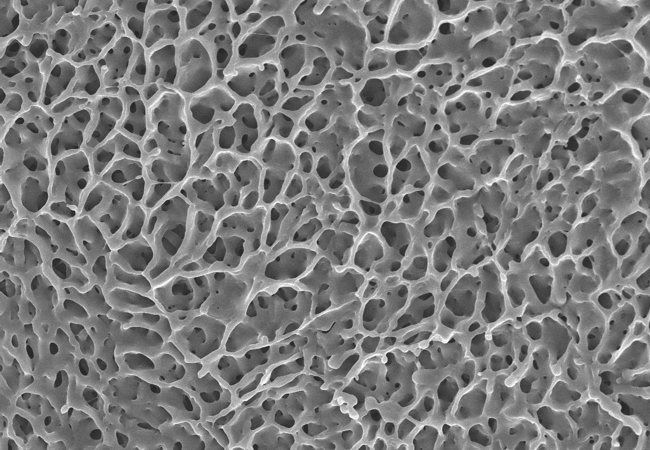
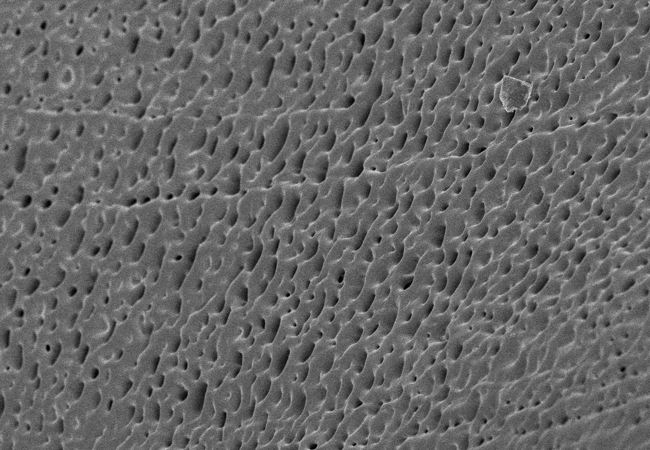
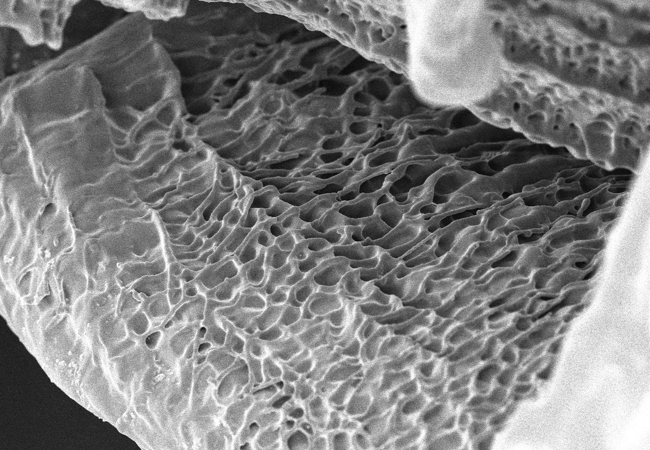
SEM · 3 views
SEM image of StemGel 1
SEM image of StemGel 2
SEM image of StemGel 3
SEM imagery · StemGel®-T-Link with StemGel® Mesh-Link

Two components. One protocol. Reproducible results.

01

01 · Mix

Combine StemGel-T-Link and StemGel-Mesh-Link

Two components mixed at room temperature. Set stiffness by adjusting the crosslinker ratio. No heat required. No pH adjustment. No timing pressure. Works in any buffer or media composition.

02

02 · Gel

Bioorthogonal gelation · cell-compatible, inert

SPAAC click-chemistry crosslinking is bioorthogonal: it does not interfere with cells, growth factors, or media components. Gelation occurs at physiological conditions. Add cells before or after gelation.

03

03 · Culture

Grow. Image. Analyse. Same results, every time.

Culture your organoids, tumoroids, or spheroids directly in StemGel. Image in situ without ECM background interference. Run drug response assays embedded in the gel. No harvesting required for imaging-based workflows.

PropertyStemGel value
CompositionFully synthetic: dendritic polyglycerol (dPG) core + PEG crosslinker
Crosslinking chemistrySPAAC (strain-promoted azide-alkyne cycloaddition), bioorthogonal
Stiffness range200–2000 Pa (tunable at mixing)
FunctionalizationModular: RGD, IKVAV, or custom bioactive motifs via click-chemistry
Gelation conditionsRoom temperature, any pH, any buffer
Batch variabilityZero, chemically defined and fully synthetic
Storage2–8°C, 12+ months shelf life
Animal-derived componentsNone, fully xeno-free
Patent statusEU Patent EP4355793B1, granted October 2024

The evidence base.

StemGel is built on published, peer-reviewed research. Not a prototype, but a validated platform with a growing body of scientific literature.

Materials Advances · 2026

Sulfation of Thiol–Maleimide Crosslinked Hydrogels Modulates Material Properties and Cell Biocompatibility

Riediger et al. · Mater. Adv. 2026, 7, 2738–2751

Introducing sulfation into thiol–maleimide crosslinked hydrogels to tune mechanical properties and biological interactions, improving cell biocompatibility for synthetic ECM applications.

Read Paper
Advanced Functional Materials · 2025

Tunable Synthetic Hydrogel Modulates Hepatic Lineage Specification of Human Liver Organoids

Wang et al. · Adv. Funct. Mater. 2025

StemGel enables systematic, stiffness-dependent control of hepatic lineage specification in hiPSC-derived liver organoids, a capability Matrigel structurally cannot provide.

Read Paper
Advanced Functional Materials · 2021

Thermoresponsive Hydrogels as Microniches for Growth and Controlled Release of Induced Pluripotent Stem Cells

Liang et al. · Adv. Funct. Mater. 2021

Thermoresponsive sulfated hydrogels engineered as microniches for iPSC growth and controlled release, demonstrating temperature-dependent cell adhesion and expansion.

Read Paper

Start your first experiment today.

We believe open science accelerates adoption. All StemGel protocols are freely available, no registration required. Download, adapt, and use them directly in your workflow.

StemGel Liver Organoid Protocol

New

hiPSC-derived liver organoids · Hepatic lineage specification · DILI assays

v1.2 · May 2026

Request PDF

StemGel Cancer Tumoroid Protocol

Cancer spheroid formation · Tumoroid drug response assays

v1.0 · May 2026

Request PDF

StemGel General 3D Culture Protocol

Broad 3D cell culture · Stiffness optimisation guide

v1.1 · May 2026

Request PDF

Need application-specific support?

For custom protocol development or hands-on guidance, contact our science team.

Contact science team
Low

Batch-to-batch variability

Custom

Bioactivity

200–2000

Pa tunable stiffness range

12+

Months shelf life at 2–8°C

Built by scientists, for scientists.

StemGel spins out of the Haag Group at Freie Universität Berlin, one of Europe's leading polymer chemistry labs, with 780+ publications and 100+ patents.

Yi-An Yang

Co-Founder

Biology & Applications

LinkedIn

Lasse Riediger

Co-Founder

Chemistry & Science

LinkedIn

Nikos Matsukas

Co-Founder

Business & Strategy

LinkedIn
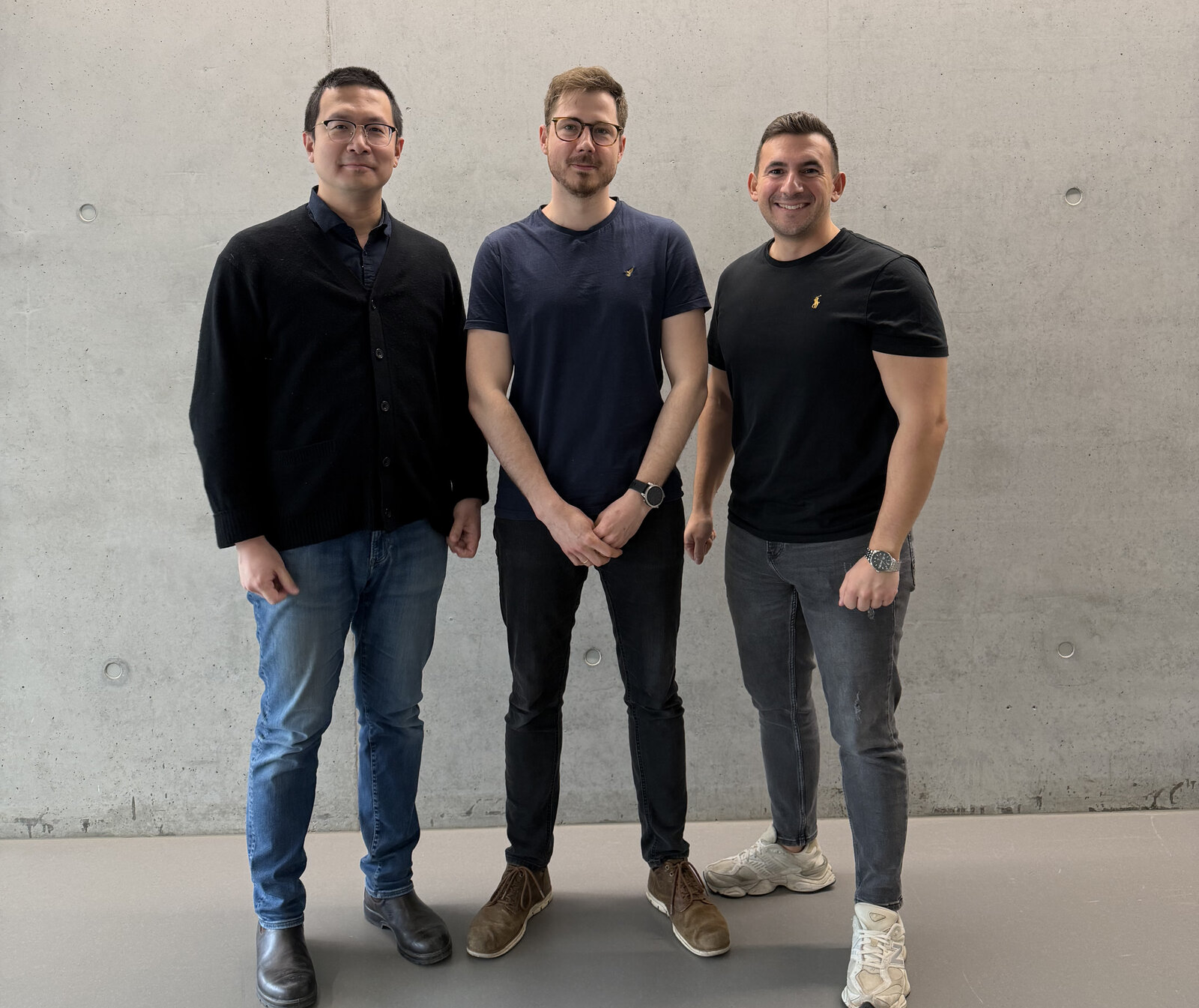
StemGel co-founders Yi-An Yang, Lasse Riediger and Nikos Matsukas

Scientific Advisor: Prof. Dr. Rainer Haag · FU Berlin, Institut für Chemie und Biochemie · 780+ publications · 100+ patents

Everything you need to know before you try it.

StemGel is currently validated for: liver organoid culture and hepatic lineage specification (hiPSC-derived), cancer tumoroid formation and growth assays, in-situ imaging workflows, and embedded drug response assays that do not require cell extraction. We are actively developing harvesting protocols; contact us if this is a requirement for your work.

Early Access

Stop repeating experiments because your matrix changed. Start with StemGel.

Claim Your Early Access Spot